What is sensory play and why is it important?
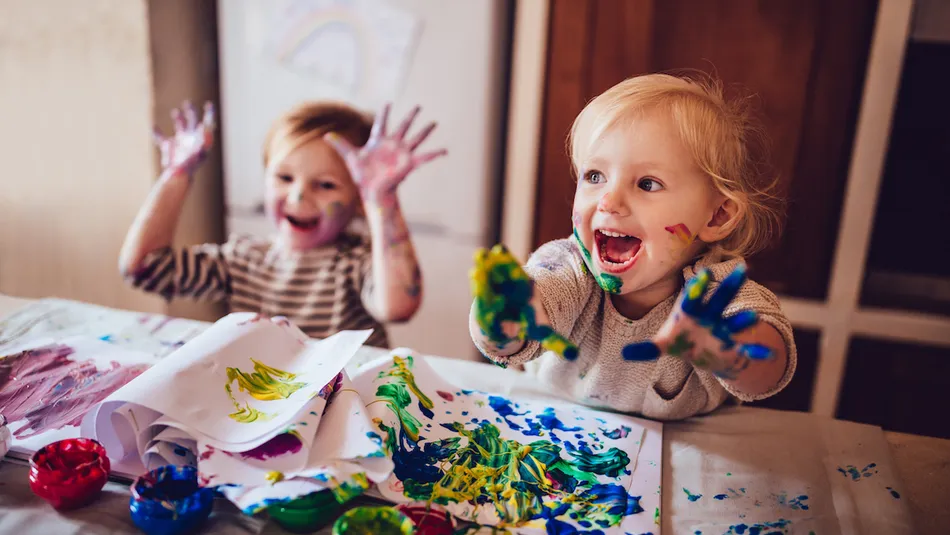
From the moment they're born, children use their senses to discover the world around them. Find out how to use sensory play to aid their development
Sensory play is any activity that stimulates our senses – touch, sight, hearing, smell and taste. It helps children interact with and make sense of the world that surrounds them.
Sensory play plays an important role in a child’s learning and development. Much of our learning comes through our ability to use our senses to retain information.
Sensory play is a lot of fun. It also offers many benefits for child development, including:
- Helping children understand how their actions affect what’s around them.
- Supporting brain development, enhancing memory, complex tasks and problem solving.
- Developing fine motor skills through tactile play (useful when children want to hold a pen or use scissors for example).
- Supporting language development, communication and social skills.
- Enhancing memory and observational skills.
- Encouraging creative and independent thinking.
- Emotional regulation by providing a calming effect on children’s angry or anxious feelings.
Some children may have a sensory sensitivity or need. Every child who has a sensory sensitivity is different, and their needs may change over time. We have information on how to support a child with sensory needs.
With your help, we could continue to provide more support to parents through our Parent Talk site.
Help us be a vital lifeline for children, young people and families
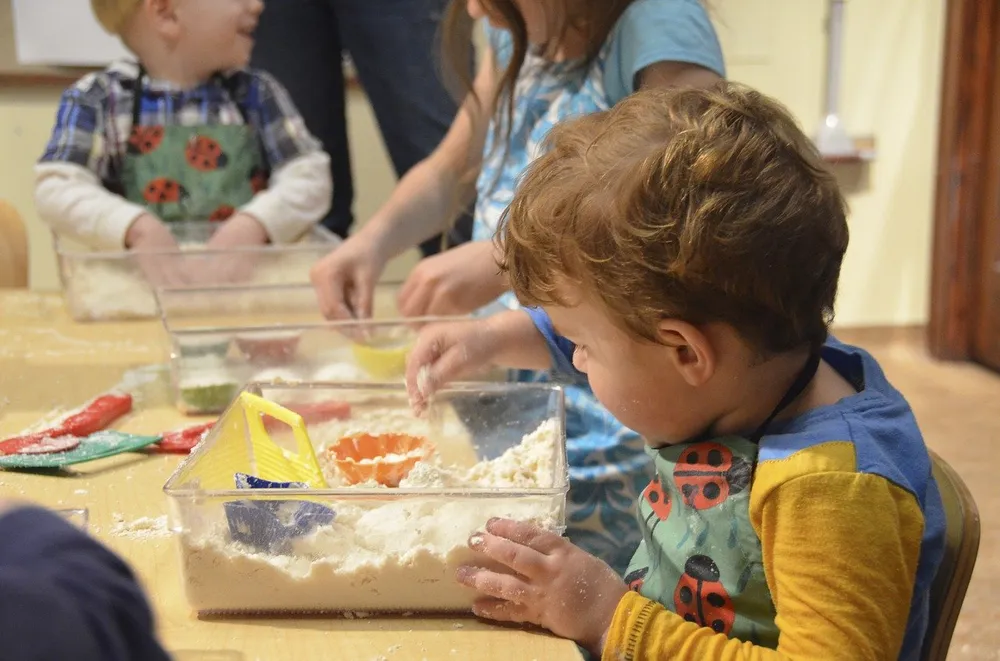
Using technology can help children's communication skills
From birth, children are ready for sensory play. Children are natural explorers – they’re constantly learning and taking in what’s around them.
Sensory activities can be adapted for different ages, needs and abilities.
You can easily adapt a simple sensory activity like blowing bubbles for different children at different stages and abilities, for example:
- Babies might enjoy feeling the bubbles pop on their skin.
- Toddlers can chase after bubbles and pop them on themselves, the floor, and surfaces around them.
- For older children, try a project where they creating their own bubble mixture and blow bubbles using a wand or their hands.

Sensory play activities can be as simple or complex as you’d like. They can often be set up with items you already have at home. There’s something to explore and wonder at in every home.
Here are some activities to try:
We know that sensory play is important in supporting a child's learning and development. That's why we have thousands of frontline workers supporting children and families every day.
Last year, incredible people like you helped us be there for 544,297 UK children, young people and families, through 303 services. Vulnerable children and families given hope and support, because of your amazing generosity.
With your help, we could reach even more.

Each year, we support thousands of families and children. With your help, we could do more.


Keep up to date with Action for Children!
Sign up to our newsletter